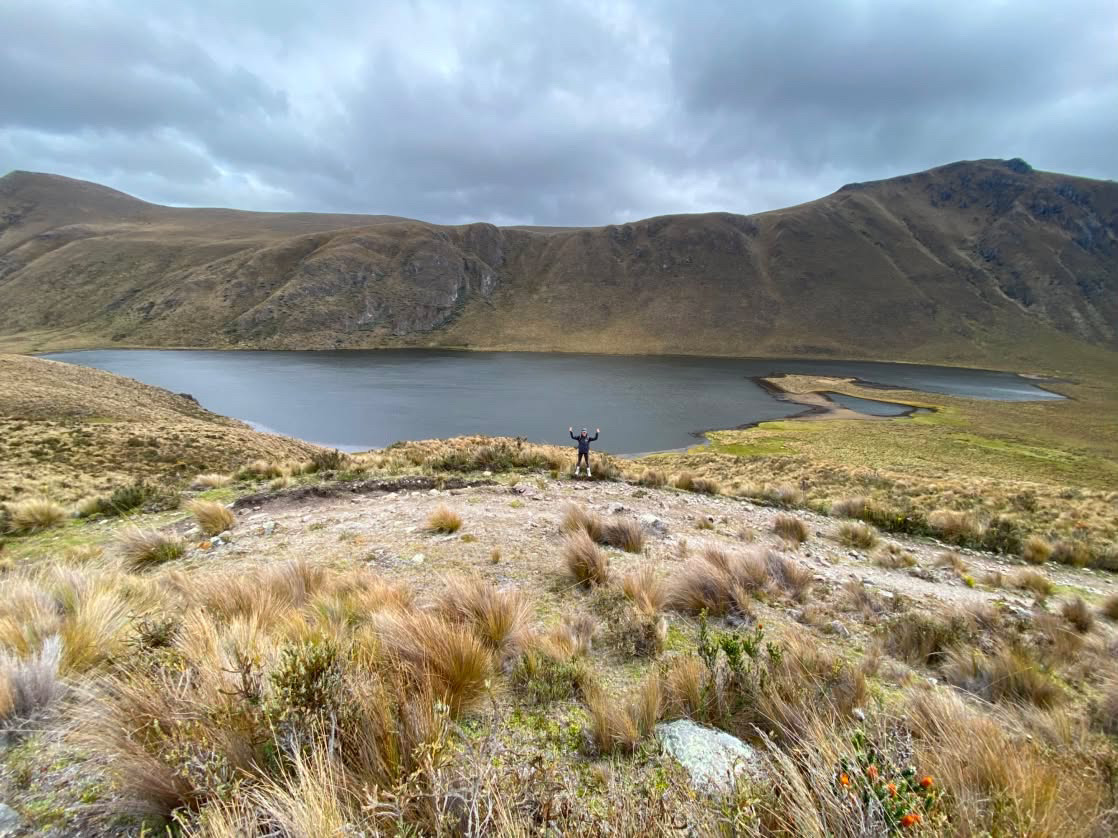
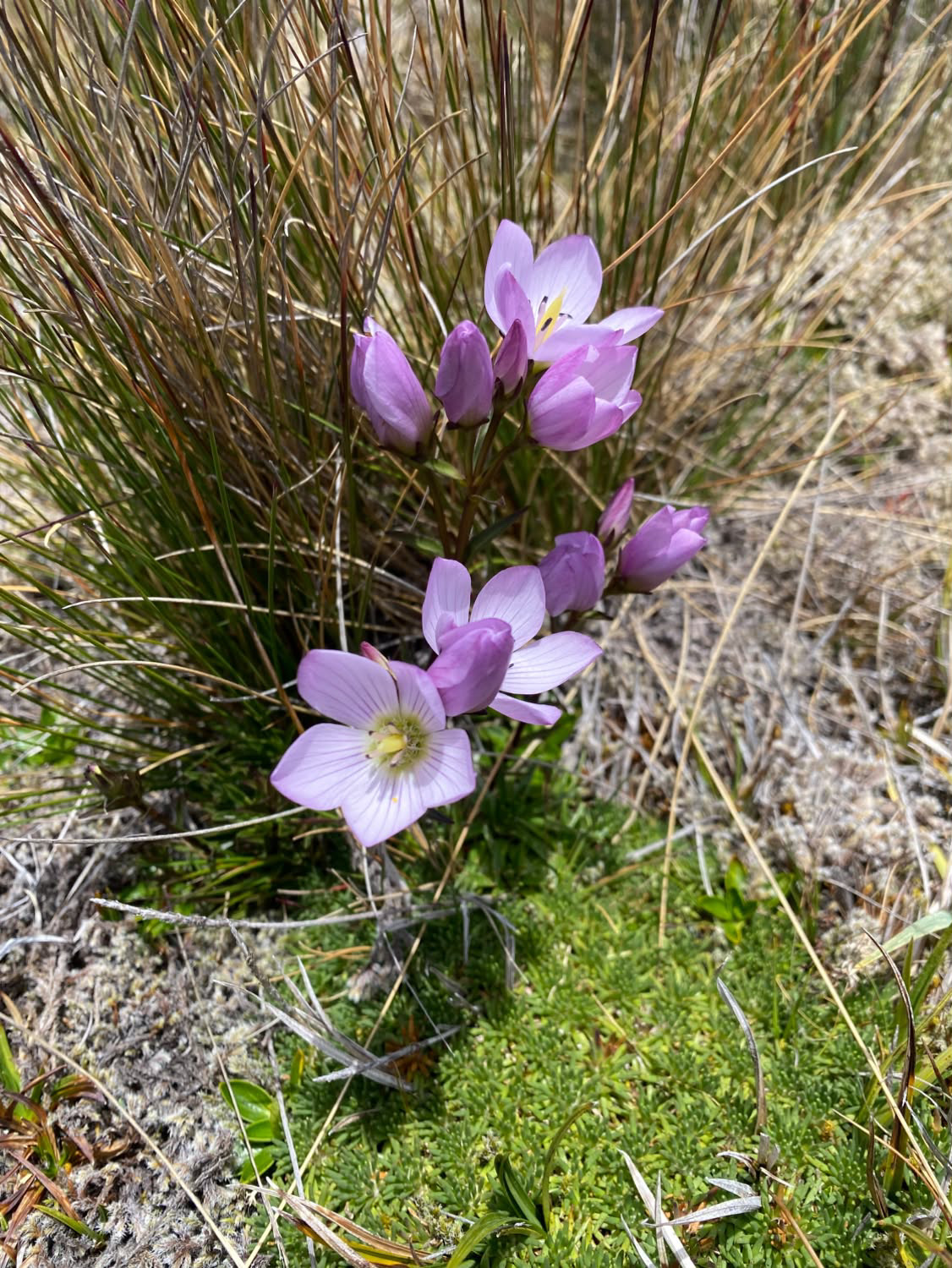
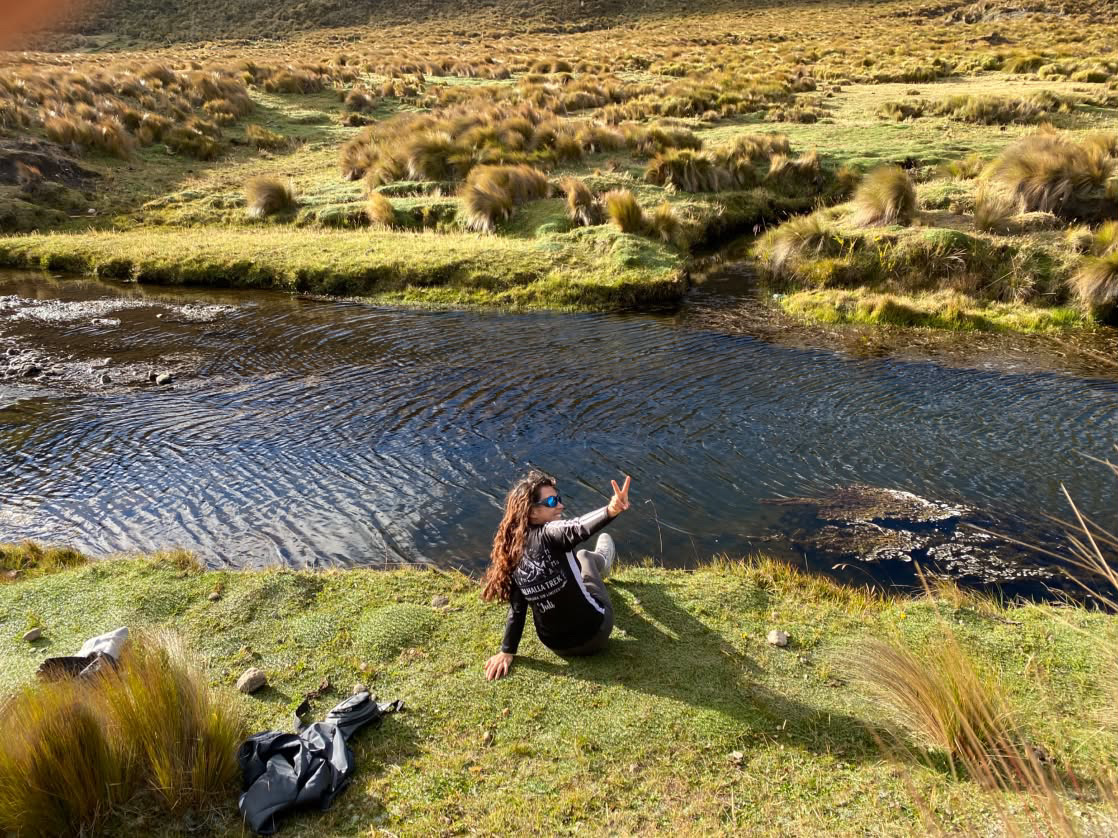
A highland lake and grassland from the Valhalla Trek photo archive.
At first glance, an open Andean hillside can seem like a simple view: grass, water, cloud and a distant ridge. Spend longer looking and the questions become more interesting. Why is the ground wet here? Where does that small stream go? Who depends on the water after it leaves the mountain?
Learning a little about Ecuador’s páramo gives a walk in the highlands a different focus. You do not need specialist equipment or a list of plant names. You need curiosity, time to notice what is around you and a willingness to treat the landscape as a place with ecological and human connections.
What does páramo mean?
Páramo is a high-Andean ecosystem, rather than a single kind of grass or an empty area above a village. The Missouri Botanical Garden’s introduction describes its varied vegetation and the importance of its soils for water storage. The name covers a living system whose character changes between places.
For a visitor, that is an invitation to look closely without rushing to label everything. Notice where taller plants give way to lower growth, where water appears and how the visible landscape changes along the agreed path. Ask your guide about the features actually present on the walk. A photograph from elsewhere in Ecuador is not a reliable identification guide for Cañar.
Water is part of the story beneath your feet
The Missouri Botanical Garden’s account of páramo soils and hydrology explains how vegetation and soils retain water and release it towards lower elevations. The landscape’s water-storage role is one reason to look beyond the distant view and take care of the ground along the path.
Try following the water with your eyes. You may be looking at a pond edge, a small channel or simply a damp area beside the path. Ask where that water travels and whether your guide knows who uses it downstream. Avoid entering wet ground merely to investigate. A useful observation does not require stepping into every feature you can see.
A clear-looking stream also does not establish a drinking-water supply for your day. Bring the water agreed in your preparation and ask about any refill arrangements beforehand. Appreciating the landscape and organising your own supplies are separate responsibilities.
How the páramo connects with Cañar
The Municipio Intercultural de Cañar describes the canton’s part of Sangay National Park as a páramo landscape connected to important water sources. That gives regional context; it does not mean every Valhalla Trek outing enters the park.
Local conservation also has a practical community dimension. In March 2023, the municipality reported restoration work around páramo and water sources, including locations around Chorocopte, Culebrillas and Patococha. The account connects care for the landscape with the people who use its water.
Keep that relationship in mind when you pass a gate, a water installation or a working area. Ask before entering or photographing anything that is not clearly part of the agreed route. A scenic landscape can also be a workplace and a source of everyday necessities.
Use a few questions to enrich the walk
Choose two or three questions rather than trying to turn a day outside into an examination:
- What is this part of the landscape called locally?
- Which plants or features can we identify confidently from the path?
- Where does the water go after it leaves this area?
- What changes has the guide noticed here, and which are observations rather than established explanations?
- Are there local access arrangements visitors should understand?
There is value in an honest “I do not know”. Record a question and check it later instead of accepting a confident guess. If you photograph a plant for identification, include enough detail from your permitted position and leave it where it grows.
Make your interest visible through your choices
Follow the agreed route, use the stopping places your guide identifies and keep food packaging secure. Ask before taking a shortcut or approaching a shoreline. Give the group enough room to pass without spreading into nearby vegetation for a picture. Leave flowers, stones and other features in place.
You can also choose a pace that allows interpretation. Tell Juliana that you are interested in water, plants or local landscape stories, then ask what can realistically be included. A general guided hike is not automatically a specialist botanical survey, and the route still has to suit the group and current conditions.
Plan a day around what you want to learn
Explore Wild Cañar for an introduction to the hiking experience, then use the trip-planning page to prepare your questions. When you contact Juliana about a future hike, mention your interest in the páramo alongside your dates, group size and walking experience. The specific route, access and arrangements need to be reviewed before confirmation.